Online checkout is currently closed. Browse products, build your list and request a quotation. Need help? Call or WhatsApp us.Online checkout is currently closed. Call or WhatsApp for enquiries.

  • Sold by Sada Smart Solutions LLP, GSTIN 29AEJFS5796N1ZTSada Smart Solutions LLP

Call or WhatsApp +91 96060 62750 / 62751, Mon to Sat, 9:00 AM to 6:30 PM

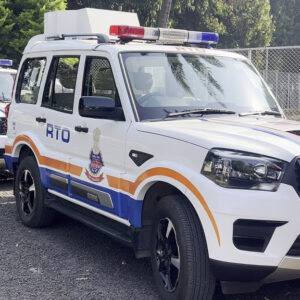
Two traffic patrol vehicles, each with an MTES roof unit above the light bar

Highways and traffic

Mobile traffic enforcement

For traffic police and transport departments. Plan an enforcement setup for the patrol vehicle and operating workflow. Confirm vehicle fit, power, evidence handling and the supported detection functions.

Suits Traffic police moving enforcement between blackspots, Highway patrols, Transport departments that cover changing locations, Roads where a fixed gantry is not practical

Brands for this system: Stellarview

The problem

Blackspots move, and a fixed gantry cannot follow them. A mobile traffic enforcement system (MTES) fits a camera, radar and processor to a patrol vehicle, so officers can enforce speed and safety rules at blackspots and changing locations without building a gantry. It detects violations while the vehicle is parked or moving, at night with infrared, and in rain and fog.

A 4D Doppler radar tracks up to 120 vehicles across lanes at speeds over 200 km/h for overspeeding. The camera also detects no helmet (rider and pillion), no seatbelt (driver and front passenger), triple riding and non-standard number plates, and where the authority has access, documents are checked against the vehicle registration and licence databases (Vahan and Sarathi). The officer in the vehicle reviews each detection on a local dashboard, corrects the plate reading if needed and submits it; a second officer approves it on the cloud dashboard before the fine (e-challan) is issued. Every officer signs in with personal credentials, so each action is on record.
How it works

In 6 steps

  1. 01Check the vehicleEach vehicle model is checked before fitting: roof mounting, cable routes, power, and space for the processing unit and battery.
  2. 02FitA roof-mounted evidence camera with infrared, a 4D Doppler radar, an on-board processing unit and a network router are fitted to the patrol vehicle. Battery backup covers remote areas and unstable power.
  3. 03Start a sessionThe officer starts a session with one click and the GPS location is logged. The system detects violations whether the vehicle is parked or moving, at night with infrared, and, as the manufacturer states, in rain and fog.
  4. 04DetectThe radar tracks up to 120 vehicles across lanes at speeds over 200 km/h for overspeeding. The camera also detects no helmet (rider and pillion), no seatbelt (driver and front passenger), triple riding and non-standard number plates. Where the authority has access, documents can be checked against the vehicle registration and licence databases (Vahan and Sarathi) where the enforcing authority has authorised access.
  5. 05Review in the vehicleThe officer reviews each detection on a local dashboard, opened on a laptop over Wi-Fi, corrects the plate reading if needed and submits it.
  6. 06Approve centrallyA second officer reviews and approves the violation on the cloud dashboard before the fine (e-challan) is issued. Every officer signs in with personal credentials, so each action is on record.
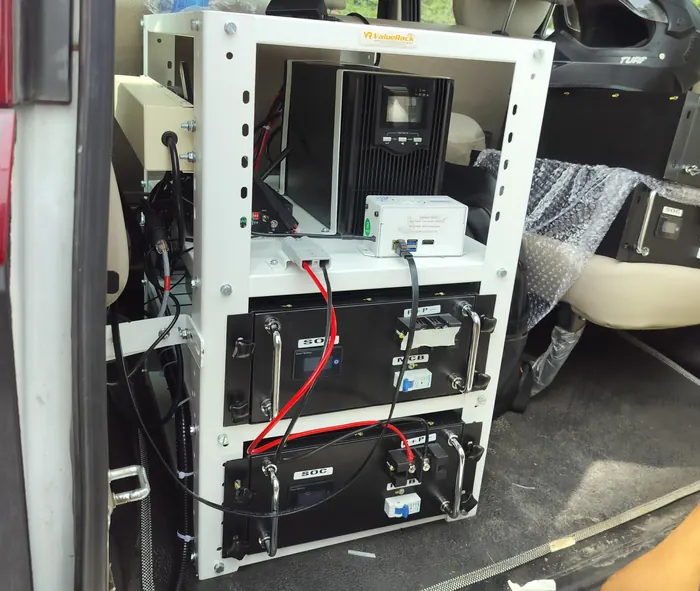
MTES equipment rack in the back of a patrol vehicle, with two battery modules and the on-board units

In the vehicle

Built into the patrol vehicle

The camera and radar sit on the roof. The processing unit, network router and battery backup go inside, and each vehicle model is checked before fitting.

Configuration

Kit for one patrol vehicle

One mobile enforcement kit fitted to one patrol vehicle. The vehicle model is checked before fitting and the kit is priced on request.

Illustrative configuration. Models, quantities and installation are confirmed for your site before an order or quotation.

Equipment

PartItemQuantity
1Mobile traffic enforcement kit
Stellarview MTES Mobile Traffic Enforcement System, Vehicle-Mounted Camera and 4D RadarSupplied with the parts below and the local and cloud dashboards
One kit per patrol vehicle
2Roof-mounted evidence camera with infrared
Captures plates and safety violations by day and at night
Part of the kit
34D Doppler radar
Tracks up to 120 vehicles across lanes at speeds over 200 km/h
Part of the kit
4On-board local processing unit
Detects violations in the vehicle, parked or moving
Part of the kit
5Network router
Cloud sync and location logging; needs your mobile data plan
Part of the kit
6Battery backup
For remote areas and unstable vehicle power
Part of the kit
EdgeTrack central monitoring platform
Stellarview EdgeTrack Central Traffic Monitoring and Enforcement Platform, Cloud or On-PremisesWhere the patrol vehicles join a wider corridor with fixed gantries
Optional

Installation

Quoted after a site survey, or carried out by your own installer.

  • Roof mounting of the camera and radar
  • Cable routes and power connection in the vehicle
  • Fitting the processing unit and battery
  • Setting up officer accounts on the local and cloud dashboards

Assumptions

  • One kit per patrol vehicle, fitted after the vehicle model is checked
  • The in-vehicle dashboard runs on a laptop over Wi-Fi
  • Two-level review: the officer in the vehicle, then a second officer on the cloud dashboard

Prerequisites, not in this configuration

  • Patrol vehicles available for fitting
  • Mobile data plan for each vehicle
  • Officer accounts and the review hierarchy

Not included

  • The patrol vehicle itself
  • Mobile data plan
  • Laptop for the in-vehicle dashboard, unless the quotation includes one
  • Integration with fines and registration systems beyond the scope agreed for the project

Approval

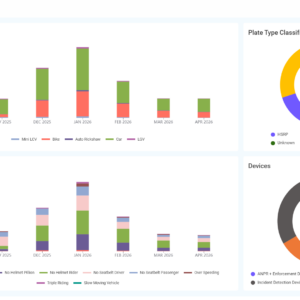
A second officer approves

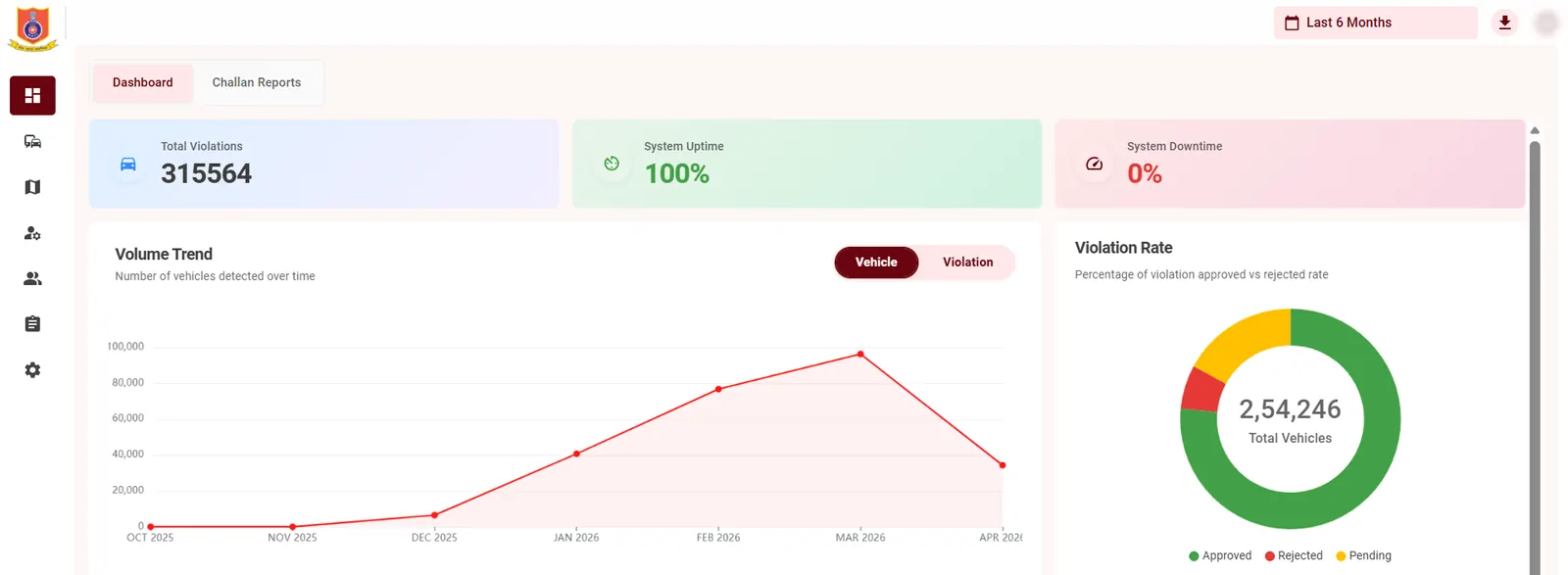
The officer in the vehicle reviews each detection and submits it. A second officer approves it on the cloud dashboard before the fine (e-challan) is issued.

MTES cloud dashboard with total violations, system uptime, a monthly volume trend and the share of violations approved, rejected and pending
MTES cloud dashboard.

Hardware

Vehicle kit and dashboards

The system is quoted after each vehicle model is checked. The kit is supplied as one system per patrol vehicle, with the camera, radar, processing unit, router and dashboards.

Stellarview MTES Mobile Traffic Enforcement System, Vehicle-Mounted Camera and 4D RadarMobile traffic enforcement system (MTES): the record for the complete vehicle kit and its local and cloud dashboards, one kit per patrol vehicle.
Stellarview EdgeTrack Central Traffic Monitoring and Enforcement Platform, Cloud or On-PremisesEdgeTrack central monitoring platform, optional, where the patrol vehicles join a wider corridor with fixed gantries.

Details

Planning the system

What you need
  • One Stellarview MTES kit per patrol vehicle: roof-mounted evidence camera with infrared, 4D Doppler radar, on-board local processing unit, network router for cloud sync and location logging, and battery backup for remote areas and unstable power
  • The local dashboard in the vehicle, opened on a laptop over Wi-Fi, and the cloud dashboard for supervisors, both part of the kit
  • The Stellarview EdgeTrack central monitoring platform, optional, where the patrol vehicles join a wider corridor with fixed gantries
  • The patrol vehicles to be fitted
  • A mobile data plan for each vehicle
  • A laptop for the in-vehicle dashboard, unless the quotation includes one
  • Officer accounts and the review hierarchy
  • Access to your fines and registration systems, if fines and document checks are to run automatically
Questions to ask
  • How many patrol vehicles, and which models? Each model is checked before fitting for roof mounting, cable routes, power and space for the processing unit and battery.
  • Which violations do you need to enforce: overspeeding, helmets, seatbelts, triple riding, non-standard plates, or all of them?
  • Who reviews in the vehicle, and who approves centrally? The review hierarchy is set up with the officer accounts.
  • Do you have access to the vehicle registration and licence databases for document checks?
  • Should approved violations go straight to your fines system? Integration is scoped for each project.
  • Will the vehicles work alongside fixed gantries? If so, EdgeTrack can bring both onto one platform.

The system is priced on request. Request a quote with the number and model of vehicles and the violations you need to enforce. Buying for clients or several sites? Trade accounts and project quotations are available.

Questions

Frequently asked

Does the patrol vehicle have to be parked to enforce?

No. Violations are detected while the vehicle is parked or moving.

How many vehicles can it watch at once?

The 4D Doppler radar tracks up to 120 vehicles across lanes, at speeds over 200 km/h.

Who decides that a fine is issued?

Two officers. The officer in the vehicle reviews each detection and submits it; a second officer approves it on the cloud dashboard before the fine (e-challan) is issued.

Does it work at night or in bad weather?

The camera uses infrared at night, and the manufacturer states the system operates in rain and fog; performance in your conditions is confirmed during commissioning.

Do we need a gantry?

No. The camera, radar and processor are fitted to the patrol vehicle, so enforcement can move to blackspots and changing locations.

Can it check a vehicle's documents?

Yes, where the authority has access to the vehicle registration and licence databases (Vahan and Sarathi).

Get a quotation

Describe your deployment

What we need to quote:

  • The patrol vehicles to be fitted
  • A mobile data plan for each vehicle
  • A laptop for the in-vehicle dashboard, unless the quotation includes one
  • Officer accounts and the review hierarchy
  • Access to your fines and registration systems, if fines and document checks are to run automatically

Prefer to talk it through? Call or WhatsApp +91 96060 62750 / 62751 (WhatsApp), Monday to Saturday, 9:00 AM to 6:30 PM IST.